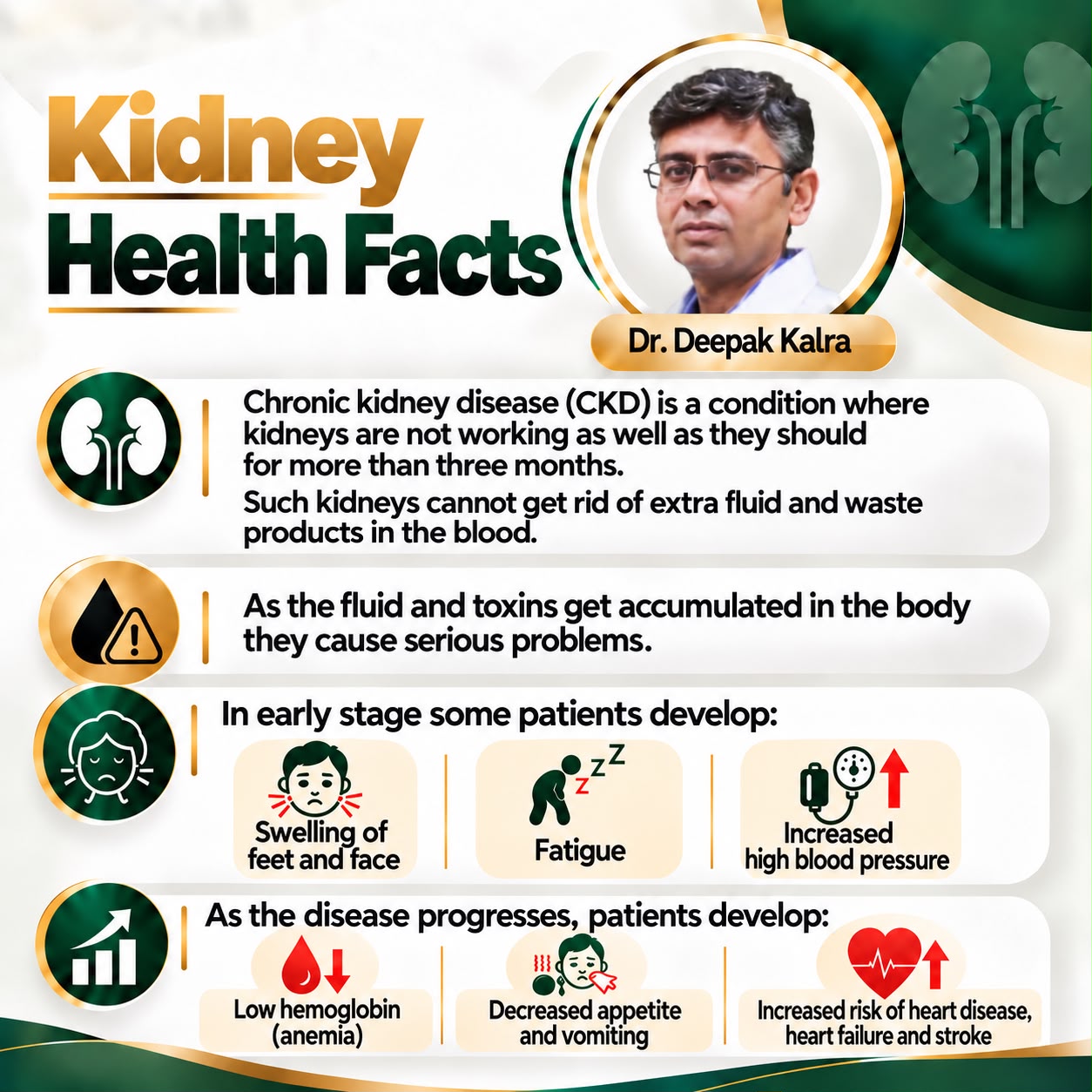
Chronic kidney disease (CKD) is a condition that develops when your kidneys aren’t working as well as they should. This means your kidneys cannot get rid of extra fluids and waste products in your blood. When the body cannot get rid of excess fluid and waste products serious problems, such as heart disease and stroke, can occur.
If you have CKD and it gets worse, then the waste products and fluids continue to build up in your blood and you will probably start to feel very unwell. It’s also likely you may notice other problems—symptoms may include things like high blood pressure and anemia, a condition in which there is a short supply of red blood cells in the body. Bottom line—anemia makes people feel tired and typically, they have very little energy.
CKD also increases your risk of worsening heart and blood vessel disease. CKD may progress slowly over a long time. Many people don’t even know they have CKD until it is very bad. If it is found and treated early, CKD may often be slowed or stopped. If it worsens, however, CKD can lead to kidney failure. People with kidney failure are coping with a very serious disease. When you have a diagnosis of kidney failure—that means your kidneys no longer work well enough to keep you alive, and you need to go on dialysis or have a kidney transplant.